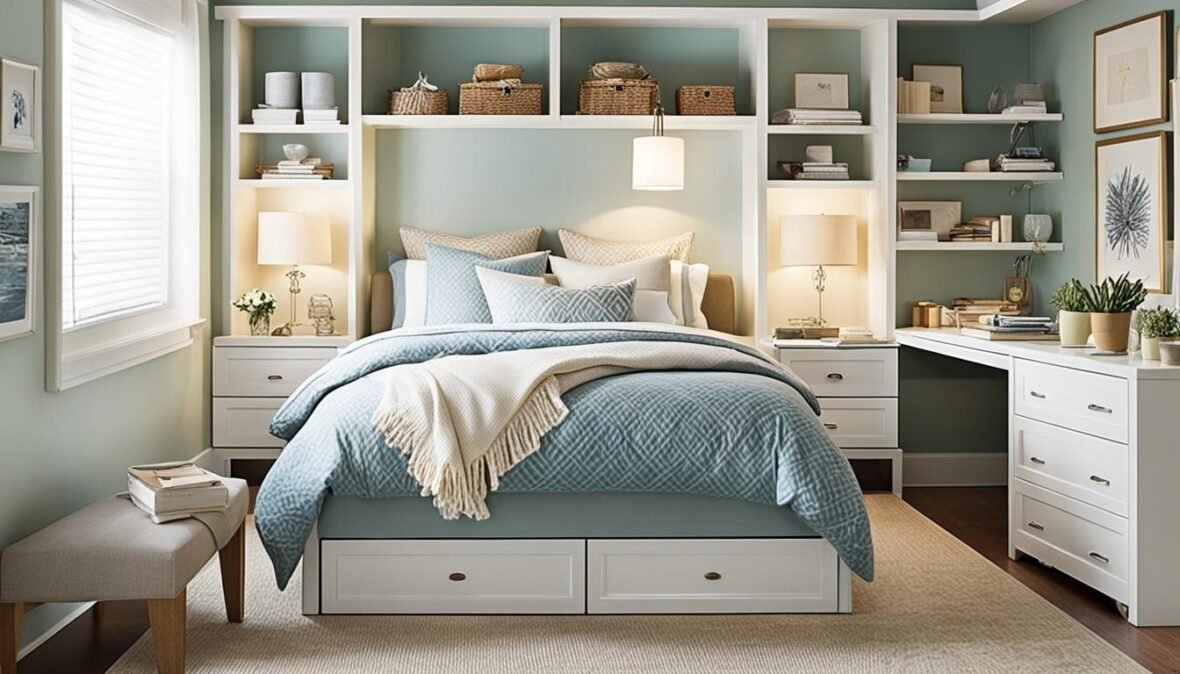
A small room is not a problem to be solved. It’s a brief — and a brief makes decisions easier, not harder. In six years of working on homes of every size, I came to appreciate the constraint. Small rooms force a kind of discipline that larger ones don’t demand: you can’t fill every corner and hope it works out. You have to think before you place anything.
The rooms I’ve seen done badly were small rooms that tried to function as large ones. The rooms done well were small rooms that accepted their scale and worked within it. Here’s what that looks like in practice.
Edit before you organise
The first step in organising a small room isn’t buying storage. It’s removing things. Every object that leaves the room creates space — not just physical space, but visual breathing room that makes the room feel larger and calmer than it actually is.
I’ve watched people acquire drawer dividers, under-bed boxes, and over-door organisers before they’ve asked the more important question: do I actually need this? A small room with fewer, better-chosen things functions better than the same room loaded with organisational systems. The system becomes the clutter.
Go through the room before you touch anything else. Separate what you use regularly from what you don’t. For what you don’t use — consider whether it needs to be stored at all, or whether it can leave the room entirely. The edit is the intervention.
Build vertically
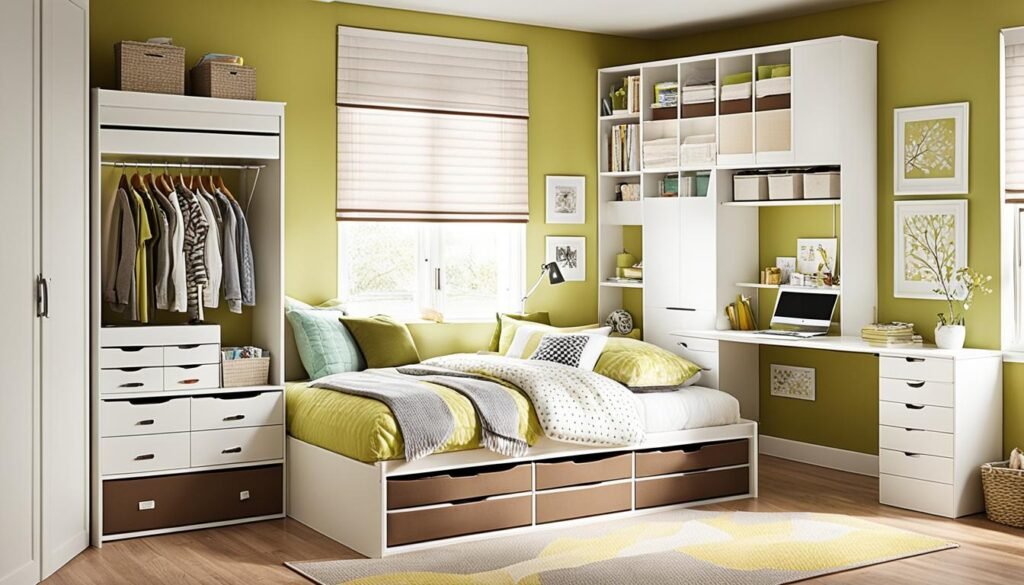
Floor space is finite in a small room. Wall space, by comparison, is often completely unused. Floating shelves, wall-mounted hooks, pegboards, and tall bookcases that reach toward the ceiling all return storage to the room without touching the floor. This matters because floor space is what makes a room feel open — the more of it you can see, the larger the room reads.
In a small bedroom I worked on, the client had floor-standing storage units along one entire wall. We replaced them with floating shelves at three heights. The floor opened up, the room felt taller, and we gained more storage than we’d had before. The principle: build up, not out.
The one exception: keep the eye-level zone relatively clear. Storage above and below eye level disappears into the room. Storage at eye level occupies visual space and makes the walls close in. Stack books to the ceiling; keep the middle zone open for a plant, a lamp, or nothing at all.
Furniture that earns its floor space
In a small room, every piece of furniture should justify its footprint. Multi-function pieces — a bed with drawers, an ottoman with storage, a desk that folds flat against the wall — earn their place by doing two things instead of one. Pieces that do only one thing need to do it exceptionally well to justify being there at all.
Size is as important as function. Oversized furniture in a small room doesn’t make the room feel more furnished — it makes it feel cramped. A sofa that’s 30cm too wide can make an entire living room feel unusable. A bed frame that’s full-height obscures the wall behind it. The furniture should fit the room’s scale, not impose its own.
When placing furniture, leave a clear circulation path. You should be able to move through the room without turning sideways or stepping around things. If you can’t, the furniture arrangement needs to change, not the furniture.
Use what you’ve been ignoring
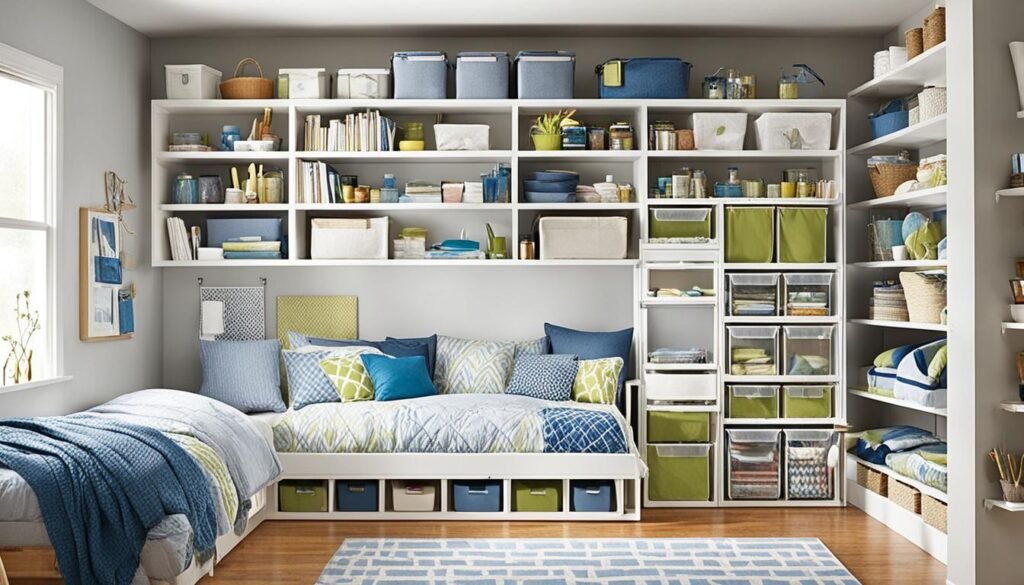
Small rooms usually have underused storage opportunities that are easy to miss because they’re not obvious. The space under the bed — if the frame allows — can hold seasonal items, spare bedding, or anything accessed rarely. The backs of doors can carry hooks, shallow racks, or pocket organisers. The space above a wardrobe, if the ceiling is high enough, can take boxes or baskets for things used seasonally.
None of this is complicated. What it requires is looking at the room from a different angle — asking what empty surface exists, rather than where to put more things. Once you find those pockets, use them for the category of things you access least often. Keep the most-used items at the easiest reach, and let the awkward spaces handle everything else.
Light and colour doing work
A small room painted a dark colour isn’t automatically gloomy. But a small room with no natural light and dark walls will feel smaller than it is. Pale walls — off-white, warm cream, soft grey — reflect what light there is and keep the room from closing in. This is functional as much as aesthetic.
Mirrors are one of the most effective tools in a small room. A mirror placed to catch natural light from a window doubles the perceived depth of the room and adds luminosity that no paint can replicate. Position it across from the window, not next to it — the reflection of the light source is what creates the effect.
For artificial light: avoid relying on a single overhead fixture. One ceiling light creates flat, even light that reads as institutional. Multiple smaller light sources — a bedside lamp, a desk lamp, a floor lamp if there’s room — give the same amount of light but with depth and warmth. A well-lit small room feels inhabited, not boxed-in.
The discipline that makes it work
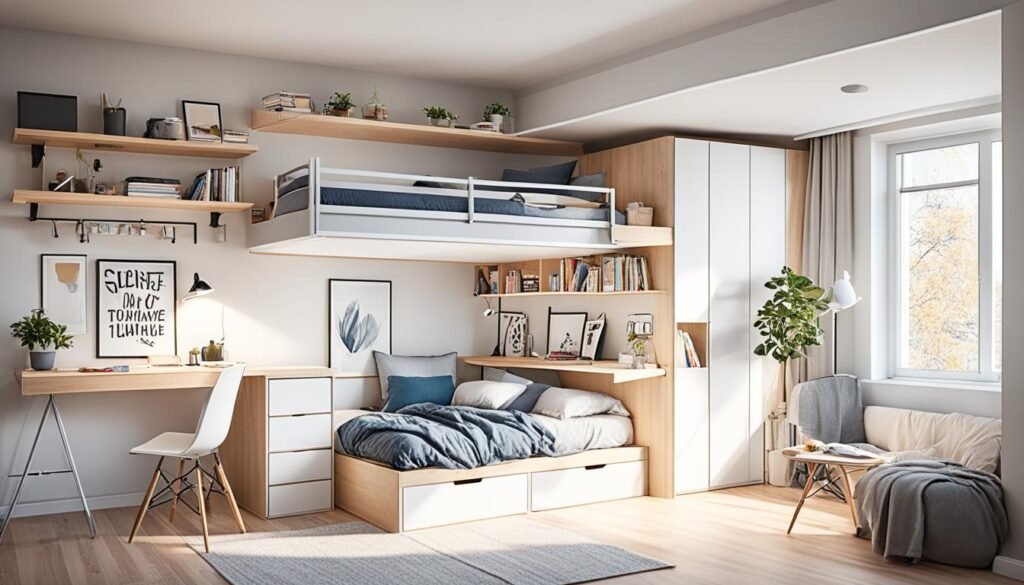
The most important thing about a small room is maintenance. The systems only work if things go back where they belong. In a larger room, a little disorder disappears into the space. In a small room, it compounds immediately — one surface left cluttered makes the whole room feel chaotic.
This doesn’t mean living in a showroom. It means building habits that match the room’s constraints. A few minutes at the end of each day, things returned to their places, surfaces clear. The small room doesn’t forgive neglect the way a large one might — but it rewards the discipline with a calm that a larger room rarely achieves.
The rooms I remember best from my years in the trade weren’t the large ones. They were the rooms where someone had worked out exactly how to live in their particular space — where everything was considered and everything had its place. Size had almost nothing to do with it.

Follow Me